

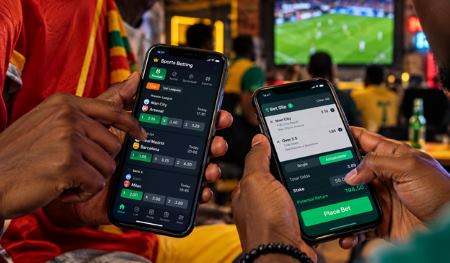

Youth Sports Betting in Africa: Why Young Football Fans Are Betting More
Youth sports betting in Africa has increasingly become part of football culture. Walk into a bar showing Premier League football in Nairobi, Accra or Lagos and the conversation is unlikely to be only about who will win.
Odds, accumulators and betting slips have increasingly become part of football discussions.
Africa’s combination of a young population, passionate football supporters and rapidly expanding digital technology has created ideal conditions for sports betting companies. The result is an industry that has moved remarkably quickly from betting shops into everyday digital life.
But its popularity among younger customers is also creating concern, particularly as youth sports betting in Africa becomes more accessible through smartphones and online platforms.

Why youth sports betting in Africa is growing
Football is already enormously popular among young Africans, particularly the major European competitions.
Betting companies have managed to build a product around something customers already enjoy.
Instead of simply watching Real Madrid against Barcelona, for example, a supporter can use match betting insights to assess the winner, number of goals or whether both teams will score.
There is nothing inherently unusual about paying for entertainment. People spend money on cinema tickets, streaming subscriptions, video games and football shirts.
The important difference with gambling is that money can also be won.
That possibility can change how customers view the product.
Someone who loses at the cinema does not believe another ticket will recover the cost of the first one. A bettor may believe another wager can recover previous losses.
Ghana offers a warning
Ghana provides one of the clearest examples.
Research highlighted by the country’s Gaming Commission in 2025 found that 46% of tertiary students surveyed had used money from their stipends for gambling. Nine percent reported gambling with money intended for tuition fees.
Those figures demonstrate where entertainment can cross a dangerous line.
Spending a small amount of disposable income on a football bet is very different from risking money needed for education, rent or food.
Ghanaian regulators have therefore tried to reinforce the idea that gambling should be viewed as entertainment rather than an investment.
Ghana’s experience also demonstrates some of the concerns surrounding youth sports betting in Africa.
Unemployment adds another dimension
The issue becomes more complicated in countries where many young adults have limited economic opportunities.
Advertising a betting product as entertainment is one thing. Customers seeing betting as a potential source of income is something very different.
No bookmaker can offer customers a reliable route out of unemployment or financial difficulty. The mathematics of commercial gambling means the operator needs an advantage to run a sustainable business.
That does not prevent individual customers from winning. Some will.
The problem comes when occasional wins create the belief that betting provides dependable income.
Regulation has to keep pace
Governments across Africa are responding in different ways.
Ghana has focused heavily on public awareness, while Kenya has repeatedly changed taxation and advertising rules surrounding gambling. South Africa has a large regulated betting industry overseen by national and provincial authorities.
The details vary from country to country, but the central question is similar everywhere: how can adults be allowed to enjoy betting while vulnerable customers receive adequate protection?
There is unlikely to be one simple answer.
As youth sports betting in Africa continues to expand, education may therefore be just as important as restrictions.
Sports betting is now firmly established as part of Africa’s digital entertainment economy. Attempts to pretend it does not exist are unlikely to work.
Customers need to understand one basic principle: a football bet can be entertainment, but it should never be confused with a salary.